• About Me

The Chronic Illness Warriors

~ Let's take this journey together. You are not invisible. Only your illness is.

The Chronic Illness Warriors

Category Archives: Disease Management

DISEASE MANAGEMENT: Tips for making grocery shopping easier

15 Saturday Apr 2017

Posted by Cassandra Carr in Disease Management

≈ Leave a comment

DISEASE MANAGEMENT: Tips for making grocery shopping easier

grocery-tips-for-the-chronically-ill

Courtesy of Grace is Sufficient

Who loathes errands like grocery shopping? *spoonie hands fly up* Yep, me too. But there are things you can do to mitigate the negative effects that might come with performing this necessary task.

1. Before you even leave make sure you have enough energy. If necessary, divide the list up into a couple little trips. You know what’s best for your situation, and don’t let anyone else tell you what you “should” do.

2. Try to park near the same spot each time. That way you’ll always know where your car is! And if possible park near a cart corral so it’s easy to drop it off when you’re done.

3. Pick a day that isn’t as crowded. Tuesdays and Wednesdays are better in my area. If you’re not sure what days are less crowded you can always ask an employee. They’ll probably be happy to tell you since it means they don’t have to deal with as many customers at busier times.

4. Always grab a cart instead of those little baskets. Even if you’re running in for three little items the odds are you’ll pass the water or juice and remember you’re running low. Now you’re left trying to lug those heavy extras around with you. Also, the cart is great to help keep your balance and offer a bit more support while walking.

5. If necessary you can get the motorized carts and take them for a drive! Remember you have to get these items in the house and put away once you’re done. A motor cart can help you conserve some energy! Don’t worry what others think – you might feel self-conscious behind the wheel the first few trips, but if anyone says something rude simply tell them, “I have an illness. You can’t see it, but I feel it. Thanks for the concern, though!” Oftentimes a response like that catches those nosy Nellies off-guard and their mouths will be hanging open as you zoom away.

6. Go against the extreme couponers and be brand specific. If I’m looking at 75 bottles of shampoo I’m not going to be able to focus and I’ll get overwhelmed. I find a brand I like and keep buying it. Believe it or not, this also makes couponing easier because you’ll only have to clip the coupons for the products you’ve chosen and it will minimize your coupon work!

7. Use a list that places the items in order according to the aisles at your store. You can make an Excel spreadsheet by store row, adding the products you use most to the template and leaving room for additions. You can even make a notes area for each store row in case there’s a buy one, get one promotion, you have a coupon, etc.

8. Use an easy coupon keeper. I organize mine by aisle number to match with my grocery list. This way when I’m in an aisle and notice a sale I just go to that aisle pocket and check for a coupon to match.

9. Bring a helper if you can. That way if you’re getting too tired to even let go of the cart you’ll have an extra set of arms to grab what you need. They also come in handy if you happen to remember you forgot to put sour cream on your list and it’s eight aisles back! Thank them with a slushee or something – that way they’ll be willing to help again sometime!

10. If you do get sick and just can’t continue don’t beat yourself up. If you see an employee, let them know that you’re sick and have to leave. They’d rather be notified so they can put away the frozen food instead of happening upon a full cart with thawed items that now need trashed. You might even be able to leave the cart there and have someone come get the items for you, especially if you can pay for everything before you leave. Don’t overdo it trying to make things easier on others, but if your groceries are paid for, the store can put the cart somewhere until another person comes to pick them up.

11. Try to arrange items on the conveyor belt according to where they go in the house. That way all the body wash and shampoo are in the same bags so you can just carry that bag to the bathroom. This also helps once you get home. If you’re running on empty by the time you arrive at your house, you can choose to leave things in the car until you gather a bit of strength or till another family member or friend arrives and can grab it for you, since you know you’re not leaving perishables in the car. I don’t remember the last time I carried bottled water, Snapple, etc into the house.

12. Most stores will call someone over to help you get your items to the car if you need the help. Don’t be afraid to ask. If you’ve used a motor cart and the store doesn’t allow them to leave the building you can ask the bagger if they’ll grab a cart so you can load the groceries in there to take out to your car. If you need to use the motor cart all the way out to the car let the cashier or bagger know that you have no greater desire at that moment than to follow their rule but you don’t have the strength to walk that far. Leave the option to them. They can let you take the motor cart or carry you.


The upshot? Organization, planning, and not being afraid to ask for help are the keys to getting through tasks like this. And hey, if your local store delivers or allows you to shop online, even better! There are services out there to assist – use them!


41064_9

DISEASE MANAGEMENT: Being your own advocate

31 Friday Mar 2017

Posted by Cassandra Carr in Disease Management

≈ Leave a comment

DISEASE MANAGEMENT: Being your own advocate

We all know how difficult it can be to deal with the myriad doctors it’s necessary to see when dealing with a chronic illness. Some will be at least good, some may be clueless. But unless you can doctor-hop, you need to figure out how to partner with them to your best advantage. Below I’ll outline some strategies I’ve heard about or used. I hope they help!

  1. Be honest about your medical condition: Symptoms, things that make those symptoms better or worse, what you’re doing to help yourself, etc. Even if talking about these things is embarrassing, it’s crucial that your doctors have all the facts.
  2. Write down questions before you go so nothing is forgotten: Inevitably, especially with how busy most healthcare providers are, they won’t have enough time to sit around while you fumble around in your brain fogged state trying to remember what you wanted to ask them about.
  3. Thoroughness on your part is important: You might think something is of no consequence, but it could be important to your doctor. Don’t leave anything out when describing your disease and your life.
  4. Educate yourself: Most doctors do their best to be informed about your disease, but you may very well know more about it than they do. Don’t be discouraged by this. Doctors don’t live with your disease 24/7 like you do. So understand your own disease so you can be a partner with your healthcare team.
  5. Don’t settle for whatever the doctor tells you: They might be wrong. If something they’re telling you just doesn’t seem right or if your gut can’t let go of that bad feeling we’ve all had, don’t ignore your concerns.
  6. Challenge your doctors: Some may become offended, and if they do, it might be time to change providers. Most will be grateful that you’re an informed patient, and when you ask questions or make suggestions, your doctor might be willing to entertain different ideas.
  7. Figure out who’s the most supportive person on your healthcare team: Inevitably, one or two doctors, nurses, or other providers will “get it”, or they’ll be more willing to go to bat for you. Once you know who these people are, who you can count on when times are really tough, use them. Let them help.
  8. Find a support system: Groups exist for pretty much every condition out there. It might take a while to seek out “your people”, but once you do, learn from them. In return, teach them. These groups make you feel less alone and can be a valuable resource with their personal experiences.
  9. Be persistent: If you don’t hear back from your doctor, keep at them until you do. You deserve to get the care you need, but you might have to push for it.
  10. Change providers if necessary: Sometimes things just don’t work out. If that’s the case between you and your doctor, don’t continue to suffer. Hopefully other healthcare professionals are in your area. Use them. You can always go back to the first one.
  11. Learn about your treatments and medications: The doctor won’t be standing next to you all the time. You will have to be the one who notices side effects or when the medicine isn’t helping. So know what the treatments and medicines are supposed to do and what the potential problems might be.
  12. Don’t forget about the mental side of things: Especially when dealing with a chronic illness, there’s a huge mental component to your condition. Just because no one can see it doesn’t mean it isn’t there. Ignoring depression, anxiety and other mental symptoms will only make your life worse.

Do you have other tips for how to advocate for yourself? Leave them in the comments below!

42362_15

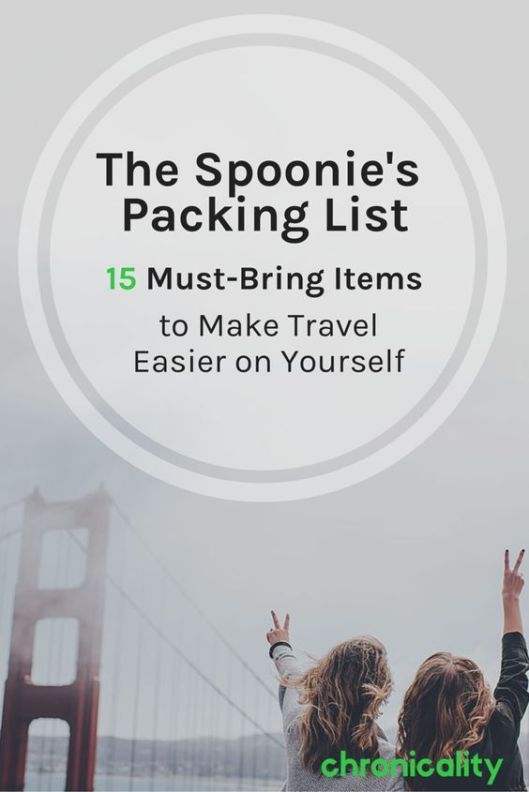
DISEASE MANAGEMENT: 15 things to pack when traveling with a chronic illness

08 Wednesday Mar 2017

Posted by Cassandra Carr in Disease Management

≈ Leave a comment

DISEASE MANAGEMENT: 15 things to pack when traveling with a chronic illness

f51fa8d0891988c90314f4a584c4605c

Traveling can be extraordinary difficult when you’re dealing with a chronic illness. The pain of uncomfortable cars and planes, plus strange beds, ratchet up your pain level. And then there’s the fatigue…the ever-ending fatigue. It’s even worse while you’re away from home than anything you endure in familiar surroundings.

But this awesome website, Chronicality, did a great post on traveling with chronic illness. Here are their tips:

1. A GOOD, ORGANIZED LIST

Never underestimate the power of a thorough packing list. For Phyllisa Deroze, author of the blog Diagnosed Not Defeated, that’s an app called Wunderlist. A cool feature: You can share your lists with a travel buddy or caretaker through the app to help you make sure you’ve included everything you’ll need. “It’s actually not marketed towards people with chronic illness, but it makes keeping track of everything so much easier,” she says.

2. ENOUGH MEDS, AND THEN SOME

No spoonie needs to be reminded about the importance of bringing their meds along on a trip. But don’t forget to bring at least a couple days’ worth of extras. That goes for meds and supplies, like glucose strips and tablets. One of the joys and drawbacks of travel is unpredictability. You may find yourself on the road for a few extra days, and will be glad you came prepared.

3. REALLY DARK SUNGLASSES

Whether you’re the pilot or the navigator, dark sunglasses can help deflect the sun and bright glares bouncing off of other cars, which can be triggers for migraines.

4. EXTRA WRITTEN PRESCRIPTIONS

Even if you plan ahead, your meds might get misplaced or ruined. Having a prescription already written out that you can hand to a pharmacist at the closest drugstore will save you the time and stress of trying to reach your doctor after hours and connecting him or her with a possibly very remote pharmacy.

5. A HYDRATION BACKPACK

Hydration packs offer hands-free hydration! Especially helpful if your road trip is taking you to a music festival or other lengthy outdoor event that could potentially tap your energy supply, it can also be used to sneak in a snack in case the food sold there will aggravate your symptoms. “Sometimes that’s easier than trying to tell the security guard that you have a disease and you have to bring in your tuna-to-go so you can survive later,” says Angie Abramite, a Chicago-area drama teacher diagnosed with Crohn’s disease.

6. A TRAVEL-SPECIFIC MOBILITY AID

Travel-size applies to more than just mini shampoos and lotions. Think about investing in a more travel-friendly version of a device that helps you, but is a little bulky. The internet is your friend when it comes to finding canes that fold up or ultra-light wheelchairs that come with a carrying bag.

7. YOUR OWN TRAVEL LINENS

Sheets might seem like a bulky item to pack in the car, but if your skin reacts easily to detergents or scented products that could be found on hotel beds, you’ll be glad you did. The same goes for towels. Luckily, several outdoor recreation companies make towels that are thin, light and quick drying.

8. A STURDY, REUSABLE WATER BOTTLE

Staying hydrated is key for some in fighting fatigue. But when it’s not filled with liquid, consider your reusable water bottle a strong storage spot for essential items, like medications or supplies that you can’t risk accidentally crushing.

9. TRANSLATIONS OF DIETARY RESTRICTIONS AND EMERGENCY INSTRUCTIONS

In case your road trip takes you across national borders to a place where your native language isn’t the main one spoken, bring along small cards with translations of any dietary restrictions and emergency instructions. Can’t read the menu? Just hand the card to a restaurant employee to make sure you don’t accidentally eat something you’ll be sorry for later.

10. BATHROOM APPS

Traveling can throw off your routine… in more ways than one. If being able to plan bathroom trips is a key component to managing your condition, consider downloading an app like Flush, Toilocator or Sit or Squat.

11. A MINI COOLER

Even if your car’s AC is downright arctic, that probably won’t help keep medications that need to be refrigerated cold enough. Bring a mini-cooler with ice that you can refill along the way. For those traveling with insulin, a specific insulin-cooling carrier may be an even better bet.

12. A VERSATILE WHEELIE BAG

When pain is a part of your daily life, traveling can be exhausting and, well, painful. Having a bag that has wheels that roll in every direction (i.e. not just forward and backward) can mean the difference between dragging something and walking alongside it. As Abramite also mentions, bags like these tend to put less strain on the abdominal area than a backpack.

13. A PAGE-TURNER READ OR BINGE-WORTHY WATCH

In case you need to take a couple of hours, a day or even a couple of days off and reenergize and recuperate from the journey while others participate in activities, it’ll help knowing you have that book you’ve been wanting to get lost in, or a tablet loaded up with a season of one of your favorite shows.

14. EARPLUGS AND AN EYE MASK

With the extra energy needed to travel, getting quality sleep is even more important than usual. Ear plugs and an eye mask will help block outside stimuli, like the noisy folks in the room next to you, or, if you’re tenting-it, those lovely (but loud) chirping birds whose day starts at dawn.

15. A JOURNAL

Let’s face it: Travel is challenging. Some would say that’s kind of the point. But for spoonies, the challenges are unique. As one author puts it, vacations while sick are “happy-sad” experiences. The happy comes from the memories you’re creating and the experiences you’re having, but the sad creeps in when your travel activities make you feel, well, crappy. You’ll want a place to process some of these thoughts at the end of the day.


How did they do? Are there other things you want to add to the list? Tell me in the comments!

essential-oil-300x250-v1

DISEASE MANAGEMENT: Other conditions related to your chronic illness

07 Tuesday Feb 2017

Posted by Cassandra Carr in Disease Management

≈ Leave a comment

DISEASE MANAGEMENT: Other conditions related to your chronic illness

Lonely broken down young woman thinking about life

Courtesy Bigstock Photo

Do you ever feel like this woman? She looks utterly broken and alone. I think anyone who battles a chronic illness feels like this every now and then. So what can cause this malaise?

Chronic illnesses tend to come with some hangers-on, if you will. Problems like:

Migraines – I have tension migraines. Many of my fellow chronic illness warriors suffer from some type of migraine. Robert Duarte, MD, director of the Pain Institute at the North Shore–Long Island Jewish Health System, in Manhasset, N.Y., said, “An underlying disturbance in the brain chemicals serotonin and norepinephrine plays a role in causing headaches…”

Additional autoimmune diseases – These include things like rheumatoid arthritis and lupus. There are lots of others. They bring their own sets of symptoms and challenges. Oftentimes, having one of these additional diseases is a major factor in your mental and emotional state. I know I always think, “What’s next? Seriously! What’s next?”

Restless legs – Ugh. Restless legs are one of the most annoying things about having a chronic disease. Our sleep is already messed up and now this? As you all know by now, my primary chronic illness is fibromyalgia. People with fibromyalgia are 11 times more likely to develop restless legs than the rest of the general population.

Irritable bowel syndrome – Another thing that people with chronic illnesses are far more susceptible to. Cramping? Check. Constipation/diarrhea? Check. Never knowing if something you’re eating is going to cause agony? Check.

Pelvic pain – This includes all kinds of pains, from bladder infections to worse menstrual cramps. What they have to do with chronic illnesses is still a mystery, much like most of the things that happen pertaining to our chronic illnesses.

Depression/anxiety – Roughly fifty percent of people who battle a chronic illness also struggle with some form of depression, anxiety, or both. I’m actually surprised the figure is that low. Dealing with the storm of chronic illness makes every day a struggle.

Weight gain – Many people with fibromyalgia lead sedentary lives due to their chronic pain, and a lack of regular physical activity increases their risk of becoming overweight or obese. “Being overweight places more mechanical stress on your joints, which can cause more pain and aggravate the fibromyalgia,” Dr. Arnold says. Plus, fat stores are pro-inflammatory, which can also exacerbate pain.

What other conditions do you have as a result of your chronic illness? Tell me in the comments!

essential-oil-468x60-v1

DISEASE MANAGEMENT: How to care for yourself when you’re too sick to care

01 Wednesday Feb 2017

Posted by Cassandra Carr in Disease Management

≈ Leave a comment

DISEASE MANAGEMENT: How to care for yourself when you’re too sick to care

l-i-v-e-i-n-t-h-e-s-u-n-s-h-i-n

I’ve been dealing with a cold for over three weeks now, and when I saw this picture, I started to think – “How DO I care for myself? What am I doing right now?” So I made a list.

  1. Turtle: This may sound funny, but it’s true. Go into pure survival mode. Do what you have to do to get through the day.
  2. Make lists: When you’re really sick, whether with a cold, the flu, a flare, whatever, stress starts to niggle at you because you know there are things you need to do but can’t. Don’t let your recovery get sidetracked. Instead, make lists. It doesn’t matter what they’re about. Even simple things like “open mail”, “pay bills”, “call cable company” are all things that, once they’re written down, won’t bother you so much.
  3. Keep eating and drinking: Even if this means you consume things you normally wouldn’t, do not stop eating and drinking. Graze if you want, just a little here and there. But try to sip something all day to keep yourself hydrated and flush out toxins.
  4. Self-groom: Or if you really can’t, ask someone else. Just brushing your hair and teeth and running a washcloth over your face will make you feel more human.
  5. Do something to make yourself feel better: Whether it’s finally watching that chick flick you haven’t had time for, spending the entire day coloring, or whatever else will help, do it.
  6. Allow yourself to be sick: Look, America has this idea that every person needs to be productive every day. It’s crap. And it’s making us sick. Not just chronic illness warriors, everyone. Think about all the people with headaches, back pain, etc. A lot of that can be tied back to the need to do do do. You’re sick. You’re battling a chronic illness. Give yourself a break.
  7. Resist the urge to overdramatize your sickness: If you’ve got a cold or some other relatively minor thing, even if you’re a chronic illness warrior, it’s probably not that big a deal. Don’t make it more than it is. Don’t let it be too big or important.

Do you have tips that work for you? Tell me in the comments!

39197_1219

DISEASE MANAGEMENT: Supporting a spouse with chronic illness

21 Saturday Jan 2017

Posted by Cassandra Carr in Disease Management

≈ Leave a comment

DISEASE MANAGEMENT: Supporting a spouse with chronic illness

screen-shot-2013-04-11-at-10-35-33-pm


I try not to copy things directly from other blogs, but sometimes it’s the way to go. I always give credit, of course, and this is no exception. This post (the URL for the full post is at the bottom of this one) was written by a man whose wife battles chronic pain and illness. In the post, he gives several tips for how to deal with a partner in this situation. I’ll let him explain…

1. I think that it is important to think of pain as your common enemy, not as a part of your wife or baggage that comes with her. It is something outside of both of you that impacts both of you and that can kill your marriage.

2. If your wife is anything like mine, she will try to hide her pain from you. She does it for two reasons: one, she does not want to be a wuss or a whiner. Second, she knows that her in pain is distressing for those that she loves, so she hides it from us.

3. Because women in chronic pain have to be good at ignoring their own pain, their maximum sneaks up on them and on you. Trust me when I say that you do not want to be surprised by your wife’s pain. The wall of pain will hit her hard, and if you are lucky she will end up snapping at your or the kids. If you are unlucky, she will collapse into sobs that will break your heart to hear. Before I learned to read the signs in my wife, it would seem like her breaking point would come out of nowhere. We tried to get her to tell us when she was coming up on her limit, but she only notices about 30 percent of the time, and that is after years of coaching and encouraging.

4. To avoid a pain-storm, be on the look-out for non-verbal clues of increased pain. My wife who is normally a font of cheerful patter gets quieter the further into pain that she goes because she does not want her voice to betray her pain. She holds her body more rigid, trying not to limp and holds her breath, taking one long rasping breath for every three that I take. There is also a look of grim determination that settles in her eyes, even if she is smiling.

5. When you note the non-verbal clues of increased pain, reflect them back to her. Ask that she put her pain on a scale from 1-10, but make note if she tends to tip to one side of the scale. My wife has had a C-section without anesthesia, so that is her 10. She rated a compound broken bone where I could see a jagged bone tip protruding through the skin of her ankle as a five. So know how she rates things. When you determine that she is in rising pain, encourage her to move towards a place where she can rest and take medication. Remind her how much the pain storm will cost her. If it is worth it for her to continue, then so be it. Do what you can to support her.

6. Chronic pain does not mean that the person has the same level of pain every day or even at various times in the day. So encourage her to put the fun stuff first. If she has enough energy and pain relief to do a quick trip out and about, encourage her to go someplace fun rather than the grocery store

7. Don’t let her “should” on herself—beat herself up for what she cannot do. Argue back when she expresses guilt or sets impossible expectations for herself. When my wife tells me that she is a bad mother because she couldn’t stand in the rain beside a soccer field, I remind her of all the other ways that she has been there for our kids. Encourage her to tell significant people in her life such as her boss and co-worker that her life is significantly impacted by pain. Remind her that stating the truth is not the same as complaining and it does not make her a whiner.

8. One of my early ways of dealing with my wife’s chronic pain was to encourage my wife not to do things that caused her pain. Then I realized that if she avoided all activities that caused her pain, she would never do anything. Let her grit her teeth and get through pain for things that are important to her, even if it kills you to watch her do it. And trust your wife if she says that she wants to have sex even while in pain. Sometimes and in some women, arousal can do wonders to offer temporary relief from pain.

9. Women in chronic pain are used to working through pain, distracting themselves, minimizing etc. They play mind games that help them get around it. But this means that they pay less attention to their bodies than other women do. In some cases, this makes it harder for the woman to get aroused. In my wife’s case, it makes her really really clumsy. I used to try to help her by saying things like “Your toes and nose should be pointed in the same direction as the location you are placing an object like a glass.” That really isn’t helpful. We have compromised: for things my wife knows are important to me, like lifting and carrying food, (I love her cooking and when it gets spilled all over the kitchen floor, I am in pain) she agrees as a favor to me to allow me to do those things. And, I keep plenty of Band-aids, ice packs and other things for the rest.

10. The key thing to remember is that pain builds even while you are managing to ignore it. The longer your wife is in pain, the more of it she experiences and the less she can block it out. So what would be an objective level 5 pain your wife can block out to make it a level 2. But when she is no longer able to block it, it will come back as 6-8. Beware of this whiplash phenomenon.

Read the article in its entirety here.

essential-oil-300x250-v1

DISEASE MANAGEMENT: Why are magnesium baths so important for fibromyalgia warriors?

18 Wednesday Jan 2017

Posted by Cassandra Carr in Disease Management

≈ Leave a comment

DISEASE MANAGEMENT: Why are magnesium baths so important for fibromyalgia warriors?

People battling chronic illness are notoriously low in magnesium, an essential building block for our bodies. Magnesium isn’t the only mineral our bodies don’t get enough of, but today we’re focusing on magnesium.

magnesium

Magnesium is important for everybody, but especially for fibro warriors. Most of us don’t have magnesium to perform all the functions our body needs. Following are some of the things you might feel if you’re magnesium deficient.

Magnesium deficiency symptoms include:

  • anxiety and irritability
  • restless legs syndrome (RLS)
  • sleep disorders
  • nausea and vomiting
  • abnormal heart rhythms
  • low blood pressure
  • confusion
  • muscle spasms
  • weakness
  • unhealthy nails
  • seizures

Courtesy of VeryWell

Low magnesium levels may also lower levels of serotonin, a neurotransmitter that’s involved in these conditions as well as depression, migraine, PMS, RLS, and sleep.

Magnesium is found in several foods, including nuts (almonds, cashews, peanuts), vegetables (spinach, avocado, black beans, baked potatoes, broccoli, carrots), grains (whole wheat bread, magnesium fortified cereals, oatmeal, rice), meats/fish (salmon, halibut, chicken, beef), fruits (bananas, raisins, apples), and dairy (yogurt, milk).

As I mentioned, though, most of us are deficient in magnesium, so maybe we don’t absorb it as well as others who don’t battle fibromyalgia. So what’s a warrior to do? Get magnesium in a more direct way!

Take a bath!

Both Epsom salts and magnesium flakes work for this purpose. You’ll want about two cups for a “normal” tub. Check with your manufacturer if you have a spa tub or other specialized tub to make sure adding things to your water won’t hurt them.

Why is this method so effective? Because your skin is very good at absorbing things, so when the magnesium melts into the water, and your skin comes into contact with it in many places since you’re lying in the bath, it soaks it up like a parched garden finally getting a good watering.

Magnesium supplements also exist, and there are debates about which type is best. If you’re a fibro warrior, you’ll probably want to take a supplement. But the way I look at it is…why only use one method to ensure you get enough of a crucial compound?

Here are some products to try (my favorites!):
Epsoak Epsom Salts, 19.75 lbs

Dr. Teal’s Lavender Scented Epsom Soak, 48 ounces (lavender is a good addition to your bath, since it’s also beneficial to fibro warriors)

Ancient Minerals Magnesium Flakes, 8 lbs

Life-Pro Pure Magnesium Flakes, 44 ounces

35610_10000197


DISEASE MANAGEMENT: Chronic Illness Gift Guide, part 4

19 Saturday Nov 2016

Posted by Cassandra Carr in Disease Management

≈ Leave a comment

DISEASE MANAGEMENT: Chronic Illness Gift Guide, part 4

I’ve been writing some posts over the past week about things you can give to your loved one battling chronic illness. One post would be quite long, which is why I’m splitting it up. Here’s part 1. And part 2. And part 3. If you have any suggestions, feel free to leave a comment and I’ll research the idea.

These are products and services that relate directly to helping manage chronic pain and illness. They have been hand-picked with exactly that in mind.

  1. Roku 3 Streaming Media Player: $95.99 Like some of the other suggestions in this gift guide, this product is mainly for pain distraction. That Netflix gift card will be a lot easier to use with a Roku. 😉 Roku has tons of other streaming channels available, too. People with chronic pain sometimes can’t do more than lie in bed, so having an outlet for distraction is a great thing. And we spend so much money on meds, etc that not having to buy something expensive like a Roku would lift a weight.
  2. Compression socks: $18.99 These aren’t the same socks I own, but I wish I’d gotten these rather than the ones I purchased. Mine are pretty obviously compression socks, while these are just cool-looking socks. They are highly rated by users, and considering you get your choice of 16 different patterns, this seems like a great product for anyone looking for better circulation, which is a common problem amongst chronic pain and illness sufferers.
  3. Body pillow: $49.99 Chronic pain sufferers need sleep more than almost anyone else, and yet the aches and stiffness we deal with every day make solid sleep more difficult. We try everything we can think of to improve the quantity and quality of our sleep, and a body pillow is a pretty popular item for us to own. However, many of us can’t afford a really good pillow like this one. I think we’d all enjoy receiving one of these as a gift.
  4. Titanium Stainless Steel Heart Magnetic Therapy Bracelet: $16.95 I looked around for a long time before choosing this bracelet. Various benefits of wearing these bracelets include renewal of balance and strength, reduction of fatigue and muscle tension, increased flexibility, improved blood circulation, enhanced metabolism and detox of your body. These claims are mostly unsubstantiated, and many don’t believe they do anything, but this bracelet is so pretty that even if it doesn’t work, it’s a nice piece of jewelry.
  5. Kindle Fire HD 8″ tablet: $104.99 Many of us have some sort of ereader or tablet, but they don’t last forever. Especially with heavy use, like using the internet etc in addition to reading, these are prone to failure. Unfortunately, oftentimes when that happens we can’t afford to replace the item. If you know someone with chronic pain who is in this situation, buying them the replacement would make you very popular.

Go here for part 1 of the guide, and here for part 2. Check here for part 3. Stay tuned for the next installment! Let me know if you have any suggestions for additions!

40645_112


DISEASE MANAGEMENT: Chronic Illness Gift Guide, part 3

15 Tuesday Nov 2016

Posted by Cassandra Carr in Disease Management

≈ Leave a comment

DISEASE MANAGEMENT: Chronic Illness Gift Guide, part 3

I’ll be writing some posts over the next few weeks about things you can give to your loved one battling chronic illness. One post would be quite long, which is why I’m splitting it up. Here’s part 1. And part 2. If you have any suggestions, feel free to leave a comment and I’ll research the idea.

These are products and services that relate directly to helping manage chronic pain and illness. They have been hand-picked with exactly that in mind.

  1. Sunbeam Large Heating Pad: $33.14 I am using this heating pad right now as I work. I use it every day. It’s larger than any other heating pad I’ve owned, and has more settings. I’ve been using heating pads for years, and this is, by far, my favorite. Reviews are quite good, too — nearly 6,000 of them. The Sunbeam large heating pad appears to be the mack daddy. I approve.
  2. Himalayan salt lamp: $24.99 I own four salt lamps, but I like this one best. The warm glow of the rocks is especially comforting, and knowing the lamp is cleaning the air around me through emitting negative ions makes me happy. Negative ions reduce the effects of: dust, bacteria, pet dander, radiation, odor, insomnia, allergies, sinus, depression, migraines, anxiety, fatigue, colds, ADHD, and asthma. There are many, many different Himalayan salt lamps on the market, some of which are not genuine, but this is.
  3. 120 marker set: $14.99 Here’s a more fun product for us! These are washable markers with a fine tip. Like many markers, these do bleed through, so keep that in mind if you’re using them for adult coloring books. Most of the reviews for these are good. I own them, and after coloring lots of pages, they’re finally starting to wear out. Overall I think they’re a good value for the price.
  4. Creatively Calm Studios adult coloring books set – animal, scenery, and mandala designs: $19.97 Related to the last item…these three books have 120 designs to color. I don’t own this product, but it’s on my wish list. It says there are designs from beginner to advanced, and the reviews are excellent. I tend to go through coloring books pretty quickly, and having three to choose from would be great!
  5. EZOff Jar Opener: $14.95 This product gets great reviews. It might not be as fun as some of the other products, and doesn’t seem to be a big deal to many people, but those of us with hand and arm pain find a product like this to be a lifesaver. Oftentimes we’re trapped in our houses and have to cook for ourselves. A seemingly simple task like opening a jar can be very difficult for people with rheumatoid arthritis and other chronic conditions.

Go here for part 1 of the guide, and here for part 2. Stay tuned for the next installment! Let me know if you have any suggestions for additions!

41074_43

DISEASE MANAGEMENT: Chronic Illness Guide, part 2

13 Sunday Nov 2016

Posted by Cassandra Carr in Disease Management

≈ Leave a comment

DISEASE MANAGEMENT: Chronic Illness Guide, part 2

I’ll be writing some posts over the next few weeks about things you can give to your loved one battling chronic illness. One post would be quite long, which is why I’m splitting it up. Here’s part 1. If you have any suggestions, feel free to leave a comment and I’ll research the idea.

These are products and services that relate directly to helping manage chronic pain and illness. They have been hand-picked with exactly that in mind.

  1. Spoonk Acupressure Set: $39.99 This is a product one of my friends recommended. She said she uses it daily to help relieve the everyday aches and pains associated with chronic illness. The set includes one regular mat with 6200 points, one travel size mat which rolls into a neck massage pillow or can be used flat as a mini Spoonk, and one massage grove ball. The product gets tons of great reviews. Definitely worth checking out.
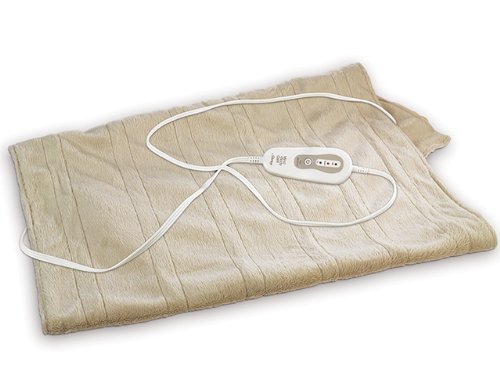
  2. Mind and Body Electric Spa Wrap: $29.88 Another product recommended by a friend. This heating pad on steroids is 3.5 times larger than the conventional heating pad. Its large size wraps around multiple parts of the body and was designed to relieve muscle pain, stress and tension. There are three heat settings and an automatic two-hour shutoff mechanism. The reviews are pretty good, though there are some customers who felt the pad was more of an electric towel. I guess it all depends on what your goals are. 41zzpbfp4gl
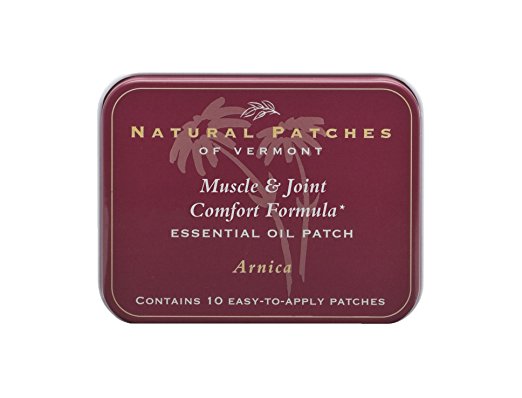
  3. Natural Patches Of Vermont Arnica Relief from Muscle & Joint Comfort Formula Essential Oil Patch, 10-Count Tin: $16.58 These are small patches that adhere to whatever part of the body you apply them to. I’ve tried several different formulations of these, and I like them. The smell lasts for about 12 hours. I wore one overnight and could still smell it in the morning. That’s a positive thing for me, though your view may be different. Arnica, rosemary, lemongrass, and ginger essential oils are all ingredients in this patch. This product also gets pretty favorable reviews. 715i3egrbol-_sx522_
  4. Vecelo mobile laptop desk cart: $31.49 This is a product I use every day as an extension of my bedside stand. It’s difficult for me to reach back to my nightstand, and I have quite a few items I need on a regular basis, so the possibility of pinching a nerve is a real thing. The reviews for this aren’t great, but for what I use it for, it works quite well.
  5. Netflix gift card: $any amount! One of the ways many of us distract ourselves from pain is by watching TV and movies. And we have so many expenses, it’s nice to know one is taken care of. This also applies to buying us anything else, but this is an easy gift that will make a chronic illness sufferer happy.

Go here for part 1 of the guide, and stay tuned for the next installment! Let me know if you have any suggestions for additions!

41094_17


← Older posts
Newer posts →

Social Media

  • View ChronicIllnessWarriorsBlog’s profile on Facebook
  • View Cassandra_Carr’s profile on Twitter
  • View BooksbyCassCarr’s profile on Pinterest

Recent Posts

  • MY LIFE: Depression is a b*tch
  • RESOURCES: 20 snacks to curb cravings
  • GO NATURAL: Top 5 natural gargle recipes & tips for a sore throat
  • RECIPE: Paleo Pumpkin Coffee Cake – healthy, easy, and delicious!
  • GO NATURAL: 18 best essential oils for nerve pain

Archives

Enter your email address to follow this blog and receive notifications of new posts by email.

Join 313 other subscribers
Follow The Chronic Illness Warriors on WordPress.com

Chronic Illness Warriors FB Group

Chronic Illness Warriors FB Group

Check out my jewelry!

Blog at WordPress.com.

Privacy & Cookies: This site uses cookies. By continuing to use this website, you agree to their use.
To find out more, including how to control cookies, see here: Cookie Policy
  • Subscribe Subscribed
    • The Chronic Illness Warriors
    • Join 66 other subscribers
    • Already have a WordPress.com account? Log in now.
    • The Chronic Illness Warriors
    • Subscribe Subscribed
    • Sign up
    • Log in
    • Report this content
    • View site in Reader
    • Manage subscriptions
    • Collapse this bar
 

Loading Comments...